

Why We Still Miss the Drive-In Movie Theatre

Long before streaming services and giant televisions filled our living rooms, a night at the drive-in movie theatre felt like an adventure.
Families loaded blankets into the car. Children climbed into the back seat wearing their pajamas. Popcorn was packed before leaving home, and everyone looked forward to an evening under the stars.
The movie itself was important, but somehow it wasn't the whole experience.
For many of us, the drive-in created memories that stayed with us long after the credits rolled.
More Than Just a Movie

A night at the drive-in began well before the film started.
Cars slowly filled the lot as families searched for the perfect viewing spot. Parents unpacked snacks while children eagerly explored the grounds. Many drive-ins featured playgrounds where youngsters could swing, climb, and play while waiting for darkness to fall.
I still remember arriving in our pajamas and spending time on the swings before the movie began. Those moments felt like part of the entertainment itself.
As the evening grew darker, drivers carefully positioned their vehicles and attached the speaker to the car window. Finding the right spot for that speaker sometimes felt like a skill all its own.
The familiar crackle of the sound system, the fading daylight, and the growing anticipation all became part of the experience.
A Golden Age of Family Entertainment
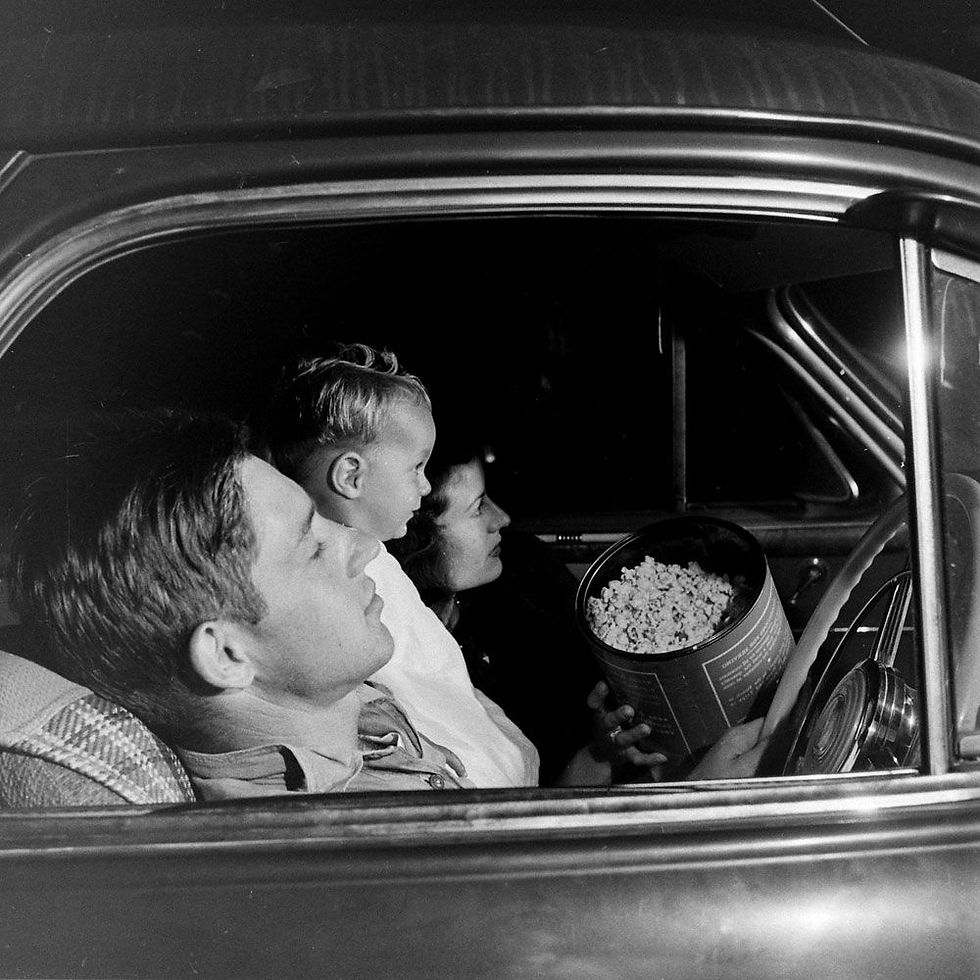
Drive-in theatres became enormously popular during the 1950s and 1960s.
They offered something unique. Families could enjoy an affordable night out together without many of the formalities of a traditional cinema. Children could bring blankets, parents could pack refreshments, and everyone could enjoy the film from the comfort of their own vehicle.
For many communities, the drive-in became a gathering place where memories were made week after week.
Behind the Beam of Light

One of my own childhood memories involves my Great Uncle, who worked as a projectionist.
I remember being invited into the projection room during a screening of Jaws 3D. As a child, it was fascinating.
The sound of the projector filled the room. Film moved steadily through the machine. From high above, I could look out over the audience and watch the movie unfold from a completely different perspective.
In those days, films arrived on large reels and required skill and attention to operate. Sometimes film would break. Occasionally it would burn. When that happened, audiences often responded with whistles, laughter, or the honking of car horns while everyone waited for the picture to return.
Those small imperfections were simply part of the experience.
Why So Many Drive-Ins Disappeared

Over time, changing technology and rising land values made it increasingly difficult for many drive-ins to survive.
Television, home video, multiplex cinemas, and eventually digital entertainment all changed the way people watched movies.
One by one, many drive-in theatres closed their gates for the last time.
While a number still operate today, they are far fewer than during their heyday.
Why We Still Remember Them

Perhaps we miss drive-ins because they offered something that feels increasingly rare today.
They encouraged us to slow down.
The evening wasn't rushed. Families spent hours together. Children played before the movie started. Friends gathered. Couples shared first dates.
The drive-in wasn't simply a place to watch a film.
It was a place where ordinary moments became treasured memories.
When people speak fondly of drive-ins today, they often remember the popcorn, the playground, the speakers, the cars, the summer air, and the people they shared those evenings with.
The movie itself is sometimes the part they remember least.
A Few Lights Still Shine
Thankfully, a small number of drive-in theatres continue to operate.
They stand as reminders of a time when entertainment was often as much about togetherness as it was about the feature presentation.
For those fortunate enough to visit one today, a drive-in offers more than nostalgia.
It offers a glimpse into an experience that generations before us enjoyed and cherished.
Final Thoughts on Drive-in Movie Theatres
Some memories stay with us because they remind us of the people who shared them.
The drive-in movie theatre may have faded from many communities, but the experiences it created continue to live on through family stories, treasured photographs, and the memories of those who were there.
The giant screens, the playgrounds, the crackling speakers, and the glow of the projector may belong largely to another era, but the joy of those evenings remains.
And perhaps that is why we still miss the drive-in movie theatre.
Many drive-ins offered more than movies. Some became popular flea markets on weekends, creating another gathering place for families and collectors. Others introduced audiences to new cinematic experiences that transformed the way films were presented.


Comments